.png?x-oss-process=image/resize,h_500,m_lfit/format,webp)



Optimizing accelerator formulations to improve tire vulcanization efficiency
The tire industry benefits from continuous improvements in vulcanization systems thanks to a scientific approach to accelerator compatibility , proportion control, and mixing process optimization. This article examines, from a technical and pragmatic perspective, how the rational combination of CBS (N-cyclohexyl-2-benzothiazolesulfenamide) and other accelerators, the management of anti-scorch agents, solvent selection, and sound environmental practices can reduce curing times, prevent finishing defects, and maintain productivity.
Chemical principles and compatibility strategies
Sulfenamide accelerators like CBS act as retarding accelerators: they provide scorch safety during mixing while allowing for a rapid increase in vulcanization rate upon heating. The key is to combine CBS with secondary accelerators (e.g., aromatic amines, sulfides) to obtain a vulcanization curve profile (t10, t90, Rc) suited to the tire compound.
General recommendation: maintain an accelerator/sulfur (A/S) ratio between 0.8 and 1.8 depending on the formulation (tire casing vs. tread compound). Workshop tests show that an optimized A/S can reduce t90 by approximately 10–25% without compromising grip or toughness.

Practical dosages and measurable impacts
The ranges below are derived from industrial studies and customer trials conducted under pneumatic production conditions. They provide reliable starting points for progressive validation.
| Component | Recommended dosage (phr) | Expected effect |
|---|---|---|
| CBS (sulfenamide accelerator) | 0.5 – 2.0 | Hot safety, scorch delay, good curing speed |
| Secondary accelerators (e.g., DPG, MBT) | 0.5 – 1.5 | Adjustment of the treatment profile, final elasticity |
| Sulfur (S) | 1.0 – 3.0 | Wear resistance and crosslinking network |
| Antiscorch / retardants | 0.2 – 1.0 | Increased mixing safety, prevention of cracking |
Mixture control and operational sequencing
A standardized mixing protocol reduces the risks of focal burns and inhomogeneity:
- Phase 1 (masterbatch): filler, carbon black, plasticizers, reinforcing agents; temperature ≤ 80 °C .
- Phase 2: addition of CBS and other temperature-controlled retarded accelerators 50–70 °C to ensure fine dispersion.
- Phase 3 (post-mix): sulfur and antiscorch added at the end of mixing (2nd pass) to avoid premature activation.
Practical validation: a pneumatic foundry observed, after adjusting the sequencing and using purified CBS, a reduction in t90 from 18 to 14 minutes (gain ~22%) and an increase in t10 (better mixing safety) from 1.8 to 2.4 minutes.
Choice of solvents and eco-friendly practices
For dispersing accelerators and additives, prioritize solutions with low organic emissions (isoparaffinic solvents or, better yet, solvent-free formulations). Good practices include:
- Prefer aqueous or paste-like dispersions to limit VOCs.
- Reduce solvent volume and recycle via recovery systems (yield > 90% expected).
- Selection of accelerator grades compliant with REACH requirements and import standards (documentation provided by the supplier).
From a regulatory standpoint, the use of traceable accelerators and raw materials facilitates export to demanding markets and compliance with international requirements.

Progressive validation protocol in production
In order to incorporate any change in formulation while minimizing risk, it is recommended to adopt a three-step validation process:
- Laboratory: gram scale — study of the MDR curve, DSC and dispersion tests.
- Pilot: batch 50–200 kg — verification of behavior in mixture, physical quality control (hardness, tensile strength, abrasion).
- Production: normal batch — statistical monitoring (SPC) for 3–6 consecutive production cycles.
These steps make it possible to identify the real impact of the modifications and to fine-tune dosages and machine settings.
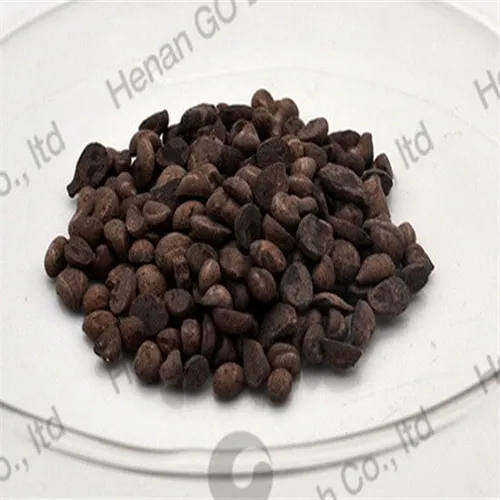
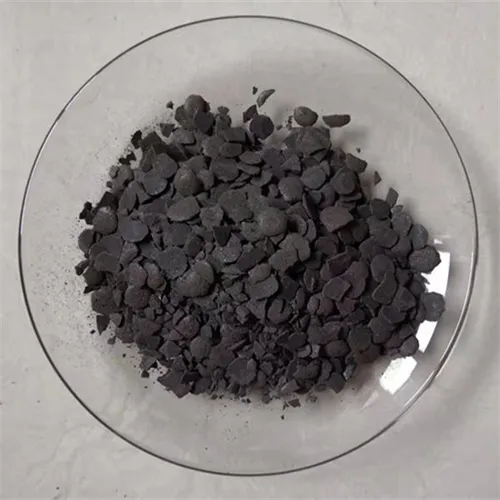
In parallel, the choice of accelerator supplier is crucial: high-purity products with controlled particle size and regulatory documentation facilitate reproducibility. CBS accelerators offered by some manufacturers include grades optimized for continuous mixing (particle size ≤ 100 µm) and certificates of conformity that expedite export compliance.
Note: The values and ranges indicated are references derived from industry practices and customer tests. Implementation must follow in-house validation tests, taking into account the specific characteristics of each compound and safety requirements.

-1.jpg?x-oss-process=image/resize,h_1000,m_lfit/format,webp)





.png?x-oss-process=image/resize,h_100,m_lfit/format,webp)